Debt help — your free, regulated options
Links marked * are commercial or go to our partner sites, which share our operator. Third-party companies may pay us commission. How we make money.
In short: If you're struggling with debt, the most important thing to know is this: you never need to pay for debt advice in the UK.
If you're struggling with debt, the most important thing to know is this: you never need to pay for debt advice in the UK. Several charities provide free, FCA-regulated help — and they're usually more effective than commercial debt-management companies.
- Published:
- Last updated:
- Editorial responsibility:
- Kaiser Khan, Editorial Director
Where to get free, regulated help
These four organisations are the gold standard. Every one of them is free and confidential. StepChange, National Debtline and Citizens Advice are authorised by the FCA to give debt advice; MoneyHelper is the government-backed money guidance service run by the Money and Pensions Service (MaPS). None of them will pass your details to commercial debt-management firms.
- StepChange
The UK's largest free debt charity. Online debt remedy tool and phone advice.
- National Debtline
Run by the Money Advice Trust. Strong on self-help, with template letters and a webchat service.
- Citizens Advice
Local face-to-face debt advice across England, Wales, Scotland and Northern Ireland.
- MoneyHelper
Government-backed signposting service that will route you to the right specialist for your situation.
Priority debts come first
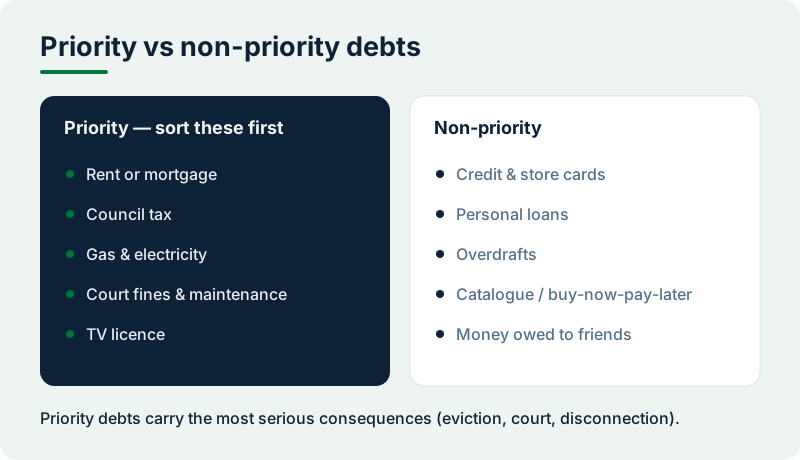
Some debts have much more serious consequences than others. Rent or mortgage arrears, council tax, utility bills, court fines and child maintenance are called priority debts because non-payment can lead to losing your home, having goods seized, or even imprisonment.
Credit cards, overdrafts and personal loans are non-priority — uncomfortable, but the consequences are slower. Always deal with priority debts first.
The main UK debt solutions
Once you've spoken to a free adviser, they'll discuss whichever of these is right for you. Each has serious consequences for your credit file and future borrowing — don't enter one without regulated advice.
- Debt Management Plan (DMP)
Informal agreement with non-priority creditors to reduce monthly payments. Not legally binding.
- Debt Relief Order (DRO)
For people with debts under £50,000, low disposable income and few assets. Debts are written off after 12 months. Free to apply via an authorised intermediary.
- Individual Voluntary Arrangement (IVA)
Formal agreement supervised by an Insolvency Practitioner — usually six years of payments, then remaining debts written off. Carries fees, charged to the arrangement.
- Bankruptcy
Most debts cleared, but your assets can be sold. Application fee currently £680. Rarely the right first option — always discuss alternatives with a free adviser first.
- Breathing Space
A 60-day legal pause on interest, fees and enforcement action while you take regulated advice. Apply through any FCA-authorised debt adviser.
Warning signs of bad 'help'
Avoid any company that contacts you out of the blue, charges upfront fees, promises to 'write off' your debts under obscure legal theories, or pushes you into an IVA without explaining the alternatives. If in doubt, check the firm on the FCA Financial Services Register.
Breathing Space, in detail
The Debt Respite Scheme (Breathing Space) became law in May 2021 and gives you 60 days during which most creditors must stop interest, fees and enforcement action on qualifying debts. You apply through any FCA-authorised debt adviser; you don't need to pay anything and it isn't shown on your public credit file (though lenders may see an internal marker).
A separate Mental Health Crisis Breathing Space gives the same protection for as long as you receive mental health crisis treatment, plus another 30 days. An approved mental health professional starts the process — usually through a community mental health team or hospital.
Dealing with bailiffs (enforcement agents)
Bailiffs can only force entry for unpaid criminal fines, HMRC debts, or under a warrant — never for council tax or commercial debt on a first visit. You don't have to let them in; they can't break in to a domestic property to enforce most civil debts.
If a bailiff is at your door, you can ask for ID and to see their certificate. You can also negotiate a Controlled Goods Agreement that lets you keep your possessions in exchange for a payment plan. Get free help fast: StepChange and National Debtline have specialist bailiff lines.
Council tax arrears — the most aggressive UK debt
Miss two months of council tax and the whole year's bill can become payable immediately. Councils can apply to court within weeks for a Liability Order, after which they can deduct from wages, benefits, or send bailiffs.
Talk to your council before missing a payment, and ask about Council Tax Reduction, a Section 13A discretionary reduction, a payment plan over 12 months instead of 10, or an SMI exemption. Citizens Advice will often negotiate with the council on your behalf.
When debt feels too much
Money worries are strongly linked with mental health. If you're in crisis, the Samaritans (116 123) and SHOUT (text 85258) are free, confidential and open 24/7. If you're considering ending your life, call 999. There are no debt problems that are worth your life — and there is no UK debt problem without a regulated free route through it.
Go deeper on debt help
The Breathing Space scheme: 60 days free from creditor pressure
Breathing Space (officially the Debt Respite Scheme) gives most people in problem debt in England and Wales a legal pause of up to 60 days from interest, charges and enforcement action while they get debt advice. A separate Mental Health Crisis Breathing Space lasts for the duration of crisis treatment plus 30 days.
Read the explainer →DRO, IVA and bankruptcy compared
The three main formal insolvency routes for individuals in England and Wales are the Debt Relief Order (DRO), the Individual Voluntary Arrangement (IVA) and bankruptcy. Each has different eligibility, costs and consequences — choosing between them needs free, regulated debt advice.
Read the explainer →Priority debts vs non-priority debts
When you cannot pay everything, debts are not all equal. Priority debts are the ones where the consequences of non-payment are most serious — losing your home, having essential services cut off, or being jailed. Pay these first, then deal with non-priority debts separately.
Read the explainer →Debt management plans explained: free help to repay what you owe
A DMP is one of the most accessible debt solutions in the UK. It is not a formal insolvency procedure — it is an arrangement negotiated on your behalf with creditors. You pay what you can afford each month until the debts are cleared. Because it is informal, creditors can still chase you if they choose not to participate.
Read the explainer →Individual Voluntary Arrangements explained: a formal route out of debt
An IVA is a legally binding debt solution for people who cannot afford to repay their debts in full but can make regular payments. An insolvency practitioner manages the arrangement, and creditors vote on whether to accept it. If approved, you make one monthly payment for five to six years, then remaining unsecured debt is written off.
Read the explainer →Bankruptcy explained: the last-resort debt solution
Bankruptcy is often seen as the nuclear option, but for people with unmanageable debt and few assets, it can provide a genuine fresh start. Most unsecured debts are written off after 12 months. The trade-off is severe: potential loss of assets, six years on your credit file, and restrictions on borrowing and some jobs.
Read the explainer →Debt relief orders explained: bankruptcy for smaller debts
DROs were created for people who need debt relief but cannot afford the £680 bankruptcy fee and have relatively small debts. There is no application fee since April 2024. They freeze repayments for 12 months and write off qualifying debts at the end if your financial situation has not improved. They are simpler and cheaper than bankruptcy but have strict eligibility criteria.
Read the explainer →Council tax arrears: what to do if you cannot pay
Council tax arrears are one of the most aggressively pursued debts in the UK. Councils can obtain a liability order, use bailiffs, or even apply for committal to prison in extreme cases. But councils also have discretion to agree payment plans and apply discounts — the key is to contact them before enforcement begins.
Read the explainer →Rent arrears advice: protecting your home when you fall behind
Falling behind on rent puts your home at risk. Landlords can seek possession through the courts, and social landlords may accelerate eviction proceedings. But tenants have rights, and most landlords prefer a payment plan over eviction. Acting early — before court proceedings begin — gives you the most options.
Read the explainer →Statutory debt repayment plan explained
England and Wales already have Breathing Space for temporary protection from creditor action. Longer-term statutory plans have been discussed to simplify repaying multiple debts through one affordable payment. This guide explains what exists now and what may change.
Read the explainer →Insolvency register UK explained
Insolvency solutions have long-lasting consequences for your finances and credit record. The Individual Insolvency Register helps creditors and landlords check your status. This guide explains what appears on the register and when entries are removed.
Read the explainer →Attachment of earnings orders explained
Creditors prefer attachment of earnings orders because repayments are deducted automatically from your wages. The amount depends on take-home pay bands set by the court. This guide explains how deductions work and how to apply to reduce or suspend an order if your circumstances change.
Read the explainer →Sequestration in Scotland explained
Scotland has its own insolvency law — sequestration and protected trust deeds replace the England and Wales bankruptcy route. Rules, fees, registers and eligibility differ. Free regulated advice from Citizens Advice Scotland or a money adviser is essential before applying.
Read the explainer →Dealing with bailiffs (enforcement agents) in England and Wales: notice, fees and your rights
A letter saying bailiffs are coming is frightening, but enforcement agents have to follow strict rules. The rules changed on 1 May 2026: the minimum notice period doubled to 14 clear days and the fixed fees went up. This guide explains who bailiffs are, what they can charge, what they can and can't take, when they can come in, and how to complain.
Read the explainer →
Common questions
- Will getting debt advice hurt my credit file?
- Speaking to an adviser doesn't appear on your file. Some solutions (DMPs, DROs, IVAs, bankruptcy) do — but if you're already missing payments, the damage to your file is happening anyway.
- Can I stop creditors phoning me?
- Yes. Once you're working with a regulated adviser they can ask creditors to communicate in writing only, and you can request 60 days of Breathing Space to pause contact while you take advice.
- Are payday loans regulated now?
- Yes. Since 2015 the FCA has capped the cost at 0.8% per day, capped total charges at 100% of the amount borrowed, and limited default fees to £15. They remain very expensive — exhaust free debt advice first.
- What is a 'statute-barred' debt?
- If a creditor takes no enforcement action and you make no payment or written acknowledgement for 6 years (5 in Scotland), most unsecured consumer debts become statute-barred — meaning the creditor can no longer use the courts to collect. The debt still exists, and may still show on your credit file until 6 years after default, but it can't be enforced through court. Don't acknowledge an old debt in writing without taking free advice first; that can restart the clock.
- Can I just stop paying?
- No — that turns short-term cash problems into long-term legal ones (defaults, CCJs, bailiffs, possibly losing your home or being evicted). The right first step is always free regulated advice. They'll tell you what to prioritise, what to negotiate, and which solution fits — at no cost to you.
- How does an IVA differ from bankruptcy?
- An IVA is a formal agreement to repay an affordable share of debts over (usually) 5–6 years, after which the rest is written off. Your home is usually protected, but most assets and your conduct are tightly controlled. Bankruptcy is a court order that clears most debts immediately, but assets — including (typically) any equity in your home — can be sold. Both stay on your credit file for 6 years. Take free regulated advice before choosing.