Credit cards & loans
Links marked * are commercial or go to our partner sites, which share our operator. Third-party companies may pay us commission. How we make money.
In short: Used carefully, credit cards can be a cheap short-term borrowing tool — and one of the strongest consumer-rights tools under UK law.
Used carefully, credit cards can be a cheap short-term borrowing tool — and one of the strongest consumer-rights tools under UK law. Used badly, they're some of the most expensive debt in the country. This hub is educational information only: Money Guide is not a financial adviser and does not earn commission on credit cards.
- Published:
- Last updated:
- Editorial responsibility:
- Kaiser Khan, Editorial Director
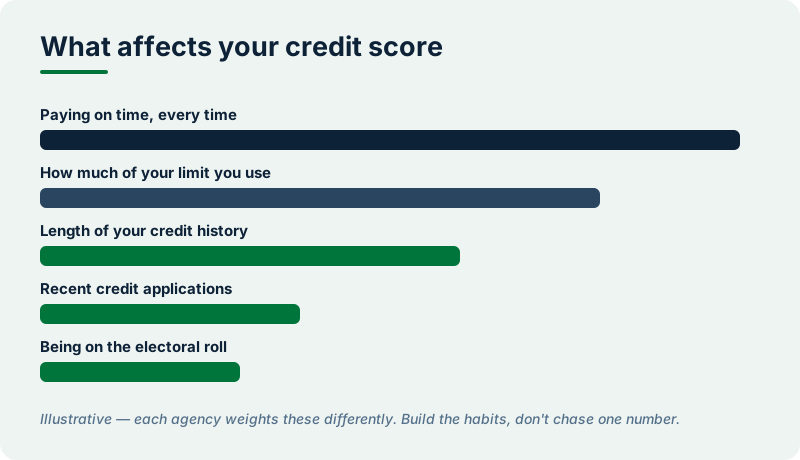
How UK credit scoring works
There is no single 'UK credit score'. The three credit reference agencies — Experian, Equifax and TransUnion — each calculate their own scores using data lenders report to them. The score is a summary; lenders see the underlying report, not the headline number.
Check your file free with each agency at least once a year. Errors are common and easy to dispute. Building a thin file from nothing usually takes about six months of on-time activity.
Soft search vs hard search
Eligibility checkers use a soft search — invisible to other lenders and harmless to your score. Actually applying for a product triggers a hard search, which sits on your file for 12 months. Don't make multiple hard applications in a short period.
Types of credit card
Pick the card type that matches the job you need it to do — not the one with the flashiest welcome offer.
- 0% balance transfer
Move existing card debt and pay no interest for a fixed window (commonly 12–30 months). A small one-off transfer fee usually applies.
- 0% purchase
Spread the cost of a planned big purchase. Set a direct debit to clear the balance before the 0% period ends.
- Cashback / rewards
Only worth it if you clear the balance in full every month — otherwise interest dwarfs the reward.
- Credit-builder
Higher APR, lower limit. Designed for people with a thin or damaged file. Used responsibly for six to twelve months, can transform your eligibility.
Section 75 protection
Under Section 75 of the Consumer Credit Act 1974, your card issuer is jointly liable with the retailer for anything you buy on a credit card costing between £100 and £30,000 — even if you only put the deposit on the card. This is the strongest consumer protection in UK law and is one of the best reasons to put large purchases on a credit card.
Personal loans
Better than a credit card for fixed amounts over £3,000 you'll repay over 1–5 years, because you lock in the rate and the monthly payment. Always check the representative APR is real (the lender must offer it to at least 51% of accepted applicants), and avoid loans with payment protection insurance added by default.
Credit utilisation: the lever most people miss
Credit utilisation is the share of your available credit you're using at the point the lender reports to the credit reference agencies (usually monthly). High utilisation — over 50% on a single card, or over 30% across all your cards — looks risky even if you clear it in full each month.
Two easy fixes: pay your balance down before the statement date (not just before the due date), and ask for a credit-limit increase you don't intend to use. Both reduce reported utilisation without you spending or borrowing differently.
0% balance transfers, done properly
A balance transfer card can shift expensive debt to a 0% interest period of typically 12–30 months in exchange for a one-off fee (usually 2–4% of the balance). Used well, it can save hundreds in interest; used badly, it just resets the clock on debt you can't repay.
Three rules: (1) divide the balance by the months in the 0% window and pay that as a fixed direct debit so it's clear when the deal ends; (2) don't spend on the card unless it also has a 0% on purchases — spending and balance transfers usually accrue interest separately; (3) don't apply for several balance transfer cards at once — each application is a hard search.
Checking and fixing your credit file
By law each of the three credit reference agencies must provide your statutory credit report free — request direct from Experian, Equifax and TransUnion, or through their authorised free access services. Check at least once a year. The agencies must investigate any item you dispute within 28 days.
Add a Notice of Correction (up to 200 words) to explain an unusual entry that's accurate but misleading. If a lender refuses to amend an error, escalate to the Financial Ombudsman.
Buy Now Pay Later (BNPL)
Klarna, Clearpay, PayPal Pay in 3 and similar services let you split a purchase into instalments at 0% interest. From 2026, the FCA will regulate BNPL: providers must run affordability checks, missed payments will be reported to credit reference agencies, and disputes will be covered by the Financial Ombudsman.
Treat BNPL like any other credit: read the terms, set up direct debits to avoid missed payments, and remember that several small parallel agreements are still credit — and from 2026 will affect your score like any other borrowing.
Go deeper on credit cards
Soft vs hard credit searches — what each one does to your file
A soft credit search is invisible to other lenders and does not affect your score. A hard search is recorded for two years and a flurry of them in a short period can knock your score temporarily. Knowing which is which protects your application.
Read the explainer →How credit scoring really works in the UK
There is no single 'UK credit score'. Each lender uses its own scoring model and looks at the data from one or more of the three credit reference agencies — Experian, Equifax and TransUnion. The scores those agencies show you are educational, not the figures lenders actually see.
Read the explainer →Section 75 vs chargeback: how to get your money back
Section 75 of the Consumer Credit Act 1974 makes your credit card provider jointly liable with the retailer when something goes wrong — for purchases over £100 and up to £30,000. Chargeback is a separate, weaker protection offered through Visa, Mastercard and Amex schemes for debit and credit cards.
Read the explainer →Refunds and returns: your UK consumer rights explained
Knowing your refund rights stops shops fobbing you off. UK law gives you strong protections when something is faulty, and extra rights when you buy online or pay by credit card. This guide explains what you are entitled to and how to claim it.
Read the explainer →How to improve your credit score in the UK
There is no single national credit score — each of the three UK credit reference agencies scores you differently, and every lender applies its own rules on top. But the habits that lift your file are the same across all of them. This guide covers the changes that make the biggest difference, how long they take, and the myths worth ignoring.
Read the explainer →Guarantor loans explained: borrowing with someone else's backing
Guarantor loans bridge the gap for borrowers who cannot get credit on their own. A guarantor — typically a parent, partner, or close friend with good credit — promises to cover repayments if the borrower fails. The borrower gets access to funds; the guarantor takes on significant risk.
Read the explainer →0% credit cards explained: interest-free spending and transfers
0% credit cards are among the most useful financial products in the UK when used correctly. They let you spread the cost of purchases or move expensive debt to an interest-free period lasting 12 to 28 months. The danger is treating the 0% period as permanent — when it ends, standard APRs of 20% or more kick in on any remaining balance.
Read the explainer →The minimum payment trap: why paying the minimum keeps you in debt
Credit card minimum payments are designed to keep you borrowing. They are typically 1–3% of the balance or £5, whichever is higher. Paying the minimum satisfies the lender but means your debt shrinks painfully slowly while interest accumulates. Understanding the maths is the first step to escaping.
Read the explainer →Credit utilisation explained: how much of your limit you use
Credit utilisation is one of the most influential factors in your UK credit score, yet many people have never heard of it. It measures how much of your available credit you are using at any point. Maxing out cards or sitting at high utilisation hurts your score even if you pay on time every month.
Read the explainer →Debt consolidation loans explained: one payment, but watch the cost
Debt consolidation rolls several debts — credit cards, store cards, personal loans — into one new loan. The appeal is simplicity: one payment, one rate, one end date. But consolidation only helps if the new rate is genuinely lower and you do not run up new debts on the cleared cards.
Read the explainer →Credit reference agencies explained
Lenders share account performance with agencies monthly. Your file affects mortgage, card and mobile contract approvals. This guide explains what appears on your file and your rights to check and challenge it.
Read the explainer →Credit file disputes guide
Inaccurate credit data can block mortgages and mobile contracts. Agencies must respond within eight weeks. This guide walks through the evidence you need and how to escalate if a dispute is not resolved.
Read the explainer →Buy now pay later UK rules explained
BNPL lets you split purchases into instalments. Missed payments can affect credit files and incur fees. This guide explains the new regulation and how to use BNPL more safely.
Read the explainer →Credit card rewards and tax explained
Rewards cards can beat debit cards for everyday spend if you clear balances monthly. Business owners face different rules for benefits in kind. This guide clarifies the tax treatment and how to judge real value.
Read the explainer →Secured loans vs unsecured loans explained
Second-charge mortgages and homeowner loans can offer larger sums at lower rates than unsecured borrowing, but they put your home at risk if you fall behind. Both types are regulated by the FCA. This guide compares the options so you can judge which suits your situation.
Read the explainer →Credit limit increases explained
Credit utilisation — your balance divided by your limit — affects UK credit scores. Managing limits responsibly can help mortgage applications, while careless increases can tempt overspending. This guide explains how to request increases, decline automatic offers, and use higher limits wisely.
Read the explainer →Credit card eligibility explained: soft searches and approval odds
Applying cold for multiple cards leaves hard footprints and can reduce approval odds. Eligibility tools and pre-approval offers let you target cards that match your credit profile — especially important for 0% balance transfer and purchase deals.
Read the explainer →Car finance commission complaints: discretionary commission arrangements
The FCA found widespread use of DCAs where brokers could set customer interest rates to earn higher commission. A redress scheme is likely but delayed — complaining now preserves your place in the queue and stops limitation arguments.
Read the explainer →Personal loan eligibility explained: soft searches and approval odds
Personal loans are regulated credit agreements — lenders must assess affordability under FCA CONC rules. Understanding eligibility tools helps you target the right APR band without damaging your credit file.
Read the explainer →Personal loan rates explained (July 2026)
Personal loan rates move with Bank Rate and lender appetite. This hub explains what to compare — educational information only, not a personal recommendation or product offer. Never borrow for discretionary spending you cannot afford to repay.
Read the explainer →Credit score myths debunked (UK)
Credit myths cause expensive mistakes — avoiding all borrowing, paying for unnecessary 'repair' services, or chasing a single magic number. UK credit files hold six years of data; scores are lender-specific models built on that data.
Read the explainer →How to compare credit cards in the UK
Credit cards are among the most searched UK borrowing products. Cards are regulated by the FCA under the Consumer Credit Act. This hub explains how to compare fairly as educational information only — Money Guide is not a financial adviser and does not earn commission on credit cards. Confirm live rates on the issuer site before applying.
Read the explainer →How to compare personal loans in the UK
Personal loans are regulated consumer credit. Comparison sites aggregate quotes, but total cost depends on your credit tier, loan amount and term. This hub explains fair comparison — information only, not a recommendation to borrow.
Read the explainer →Small claims court UK: how to make a money claim in England and Wales (2026 fees)
There's no separate 'small claims court'. It's a simpler track within the County Court, designed so people can bring or defend a claim without a solicitor. You could use it for a faulty product, poor service, an unpaid invoice or an unreturned deposit. This guide covers the limits, the pre-action steps, the 2026 fees, compulsory mediation, the hearing and what to do if you win but still aren't paid.
Read the explainer →County Court Judgments (CCJs) and your credit file: removal, 'satisfied' status and setting aside
A county court judgment (CCJ) is a court order saying you owe money. It usually happens because a claim went unanswered. It can make borrowing and renting harder for years. But what you do in the first month makes a big difference, and wrongly made judgments can be cancelled. This guide explains the one-month rule, 'satisfied' entries, setting aside, the fees, and how to check the register.
Read the explainer →
Quick answers on credit cards
Short, direct answers that link back to this guide and our calculators — useful when you need one rule fast.
- What is the Bank of England base rate today?
- What is FSCS protection?
- How does FSCS banking licence grouping work?
- How do I compare personal loans in the UK?
- What is representative APR on a personal loan?
- Can I check loan eligibility without affecting my credit score?
- What is the difference between secured and unsecured loans?
- Can I repay a personal loan early?
Common questions
- Does checking my credit file hurt my score?
- No. Checking your own file is a 'consumer enquiry' and is invisible to lenders.
- Can I be refused credit because I've never borrowed?
- Yes. Lenders need data to assess you. A small credit-builder card or a mobile phone contract paid on time for six months is usually enough to start building a file.
- What is APR vs interest rate?
- APR (Annual Percentage Rate) includes interest plus any mandatory fees, expressed as a yearly cost. It's the legally required comparison figure — always compare APR to APR, not headline interest to APR.
- How long do defaults and missed payments stay on my file?
- Missed payments are visible for 6 years from the date they were missed; defaults for 6 years from the date of default (regardless of whether you later pay the debt). A CCJ stays for 6 years if unsatisfied — but is removed entirely if you pay it within 1 month of judgment.
- Will being on the electoral roll improve my score?
- It helps. The electoral roll is one of the most-used identity checks lenders make; being on it speeds up applications and reduces the chance of being declined on data-quality grounds. Register at gov.uk/register-to-vote — it's free and takes 5 minutes.
- Should I close old credit cards I don't use?
- Usually not. Closing reduces your total available credit and can push up your utilisation ratio on the cards you keep. The age of your accounts also helps your score. Keep them open and use one small recurring direct debit (e.g. a streaming subscription) on each to keep the issuer from closing the card for inactivity.
- What's the difference between Klarna and a credit card for the same purchase?
- Klarna and other BNPL services split a single purchase into instalments at 0% if you pay on time — but historically without credit checks, FCA regulation, Section 75 protection or Ombudsman cover. From 2026 the FCA will regulate BNPL, narrowing this gap. A credit card paid in full each month is interest-free, builds your credit file and gives you Section 75 protection on purchases £100–£30,000.